
RUNHE DESIGN B&B (BREED&BLOOM) BRAND STRATEGY PACKAGING METHODOLOGY
——(Nurturing and Blooming): Making Packaging a Super Growth Engine for Brands
1、 CORE CONCEPT: B&B DUAL DIMENSIONAL DESIGN PHILOSOPHY
We have fully defined the underlying logic of Runhe Design's strategic packaging using the terms Breed and Bloom
Breed: Deep cultivation of strategy
Decoding brand genes, anchoring market positioning, cultivating long-term brand assets, and making packaging the landing carrier of brand strategy, rather than an isolated aesthetic presentation.
Bloom: A stunning presentation of the market
By using design to break through the shelves, products can be seen, remembered, and selected among a crowd of goods. At the same time, through user experience and self broadcasting, brand value can continue to bloom.
This is precisely the core positioning of Runhe's "strategy+aesthetics": to not only build a long-term moat for the brand, but also to create current market competitiveness for the product.
2、 BOTTOM LEVEL COGNITION: WHY PACKAGING IS A BRAND'S SUPER WEAPON?
Packaging is a super advertising medium: shelves are the first battlefield for brands, and packaging is a gold advertising space that does not require payment.
Packaging is a free super salesperson: good packaging speaks for itself, actively conveying value and facilitating purchases.
Neglecting packaging is the biggest brand failure behavior: strategically missing packaging will only make the initial brand investment go to waste.
3、 RUNHE'S EXPLOSIVE PACKAGING BOTTOM LOGIC: THREE ELEMENT DETONATION METHOD
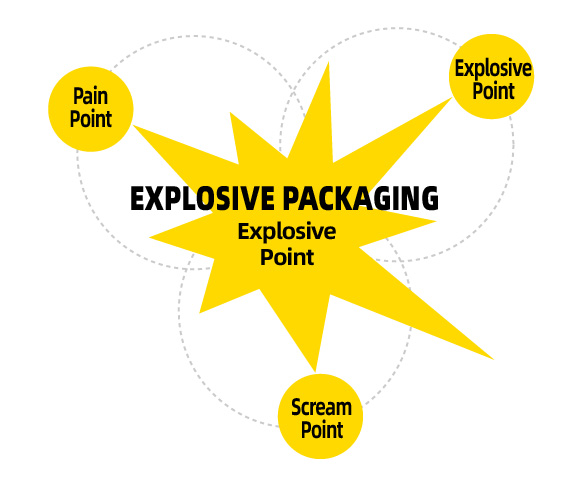
A popular packaging that can sell goods must simultaneously address three core issues and build an exclusive "tipping point":
core elements | Design Objective | Interpretation of B&B methodology |
Pain Point | Addressing consumer decision-making barriers and inconvenience in use | Accurately identifying the consumption pain points of the target audience (such as health anxiety, inconvenience in use, and lack of trust), and directly responding and solving them through packaging design, is the core insight of the Breed stage. |
Wow Point | Building shelf competitiveness and differentiation advantages | Building a brand exclusive "visual hammer" through differentiated design in color, graphics, shape, and material, achieving visibility from 3 meters away and recognition within 3 steps, is the key to breaking through the market in the Bloom stage. |
Share Point | Create user surprises and spread topics | Endow packaging with a sense of value and experience beyond the product itself, such as ceremonial unboxing, interactive design, and cultural resonance, to encourage users to actively share and achieve sustained brand value. |
The intersection of the three is the tipping point for explosive packaging, upgrading packaging from a basic function of "protecting products" to a strategic weapon of "driving growth".
4、 RUNHE PRACTICAL IMPLEMENTATION: B&B (123 VISUAL IMPACT DESIGN METHOD)
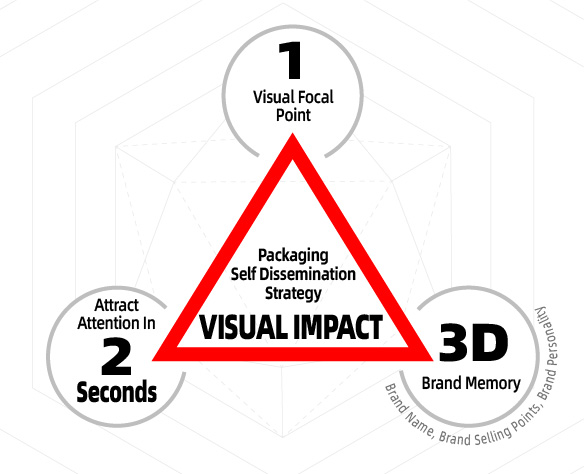
In order to implement the strategy, we break down visual impact into executable three-step strategies to ensure that the design is both visually appealing and easy to sell:
1 Visual Focus:
Information Denoising, One Shot Hit
Consumers have extremely limited attention in front of the shelves, and we must convey the most essential information with the least amount of elements.
Design action: Clearly identify the unique visual main element (brand name/super symbol/core selling point), strengthen the visual hierarchy through focus, contrast, and special techniques (hot stamping, UV, embossing), and eliminate all interfering information.
Purpose: To let users know at a glance who you are, what you sell, and why you were chosen.
Eye catching in 2 seconds:
Building visual tension on shelves
The essence of shelf competition is "attention competition", and we must capture the user's gaze within 2 seconds.
Design action: Using highly recognizable colors, strong contrast graphics, unique shapes or material processes to create strong visual contrasts; Simulate a real shelf environment for testing to ensure standing out among competitors.
Objective: To break the visual fatigue of users and transform the product from a "background board" to a "protagonist".
3D brand memory:
Accumulate long-term brand assets
Good packaging not only sells goods immediately, but also helps users remember the brand.
Design action: Transform the information from the three dimensions of brand name, core selling points, and brand personality into visual assets that can be reused for a long time (such as brand colors, super symbols, and exclusive fonts), running through the entire product line.
Purpose: To build a brand conditioned reflex for users, so that they can recognize and choose you without hesitation when shopping next time.
5、 B&B FULL PROCESS SERVICE MODEL: A CLOSED LOOP FROM INCUBATION TO BLOOM
Stage 1: Breed stage - decoding the brand and anchoring the direction
1. Brand gene decoding: Sort out the core values of the brand, target customer profile, pain points of competitor packaging, and clarify the strategic role of packaging (traffic type/profit type/image type).
2. Insight into consumer scenarios: Simulate the entire process touchpoints of consumers from purchase to use, and explore real needs and potential pain points.
3. Strategy positioning output: Based on the above analysis, clarify the core strategies of packaging design (such as differentiation strategy, scenario based strategy, emotional resonance strategy).
Stage 2: Bloom Phase - Aesthetic Implementation, Creating Explosive Products
1. Concept divergence and focus: Around the core strategy, output multi-directional creative concepts, co create with clients through internal review, and lock in the optimal direction.
2. Visual hammer design: Using the 123 visual impact method, create exclusive visual symbols and build shelf competitiveness.
3. Process and material selection: Based on product positioning and cost budget, recommend suitable materials and processes (such as special paper, embossing, embossing, hot stamping) to enhance texture and experience.
Stage 3: Market Validation Period - Data Driven, Continuous Optimization
1. Shelf simulation test: Place the design draft into a real shelf scene to test visual recognition and information transmission efficiency.
2. User feedback collection: Invite target users to conduct blind testing, collect their first impressions of the packaging, purchase intention, and improvement suggestions.
3. Iterative optimization and implementation: Fine tune based on test results, and finally output complete files that can be directly used for production, and integrate with the supply chain to achieve implementation.
6、 CHOOSING RUNHE WILL RECEIVE
From 'packaging' to 'strategy':
What we deliver is not a design blueprint, but a set of strategic solutions that can drive sales and solidify brand assets.
From "good-looking" to "easy to sell":
All designs are based on market and user insights, ensuring that they can break through on shelves and spread in the hands of users.
From 'single collaboration' to 'long-term partner':
We not only serve individual product packaging, but also help brands build a unified and sustainable visual system, achieving long-term growth.
